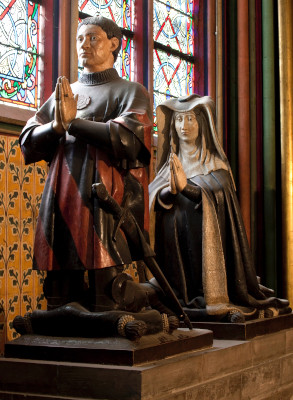
Jean Juvenal des Ursins (1431), provost of merchants, royal advisor, and Michelle de Vitry, his wife, buried in this chapel.
On display
Jean Juvenal des Ursins (1431), provost of merchants, royal advisor, and Michelle de Vitry, his wife, buried in this chapel.
On display
Jean Juvenal des Ursins (1431), provost of merchants, royal advisor, and Michelle de Vitry, his wife, buried in this chapel.
On display
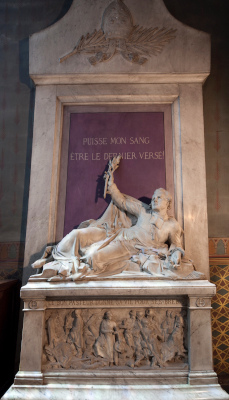
Archbishop of Paris from 1840 to 1848, fatally wounded by a stray bullet during the June 1848 riots, buried in the choir of the cathedral.
On display
Archbishop of Paris from 1840 to 1848, fatally wounded by a stray bullet during the June 1848 riots, buried in the choir of the cathedral.
On display
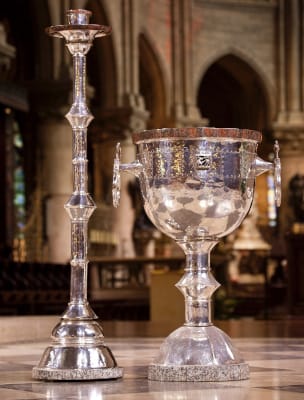
The baptismal font designed by the artist Goudji is one of the most important creations of the 20th century. It was notably used by Pope John Paul II to celebrate baptisms during World Youth Day in Paris in August 1997.
Not on display:
Stored in reserve
The baptismal font designed by the artist Goudji is one of the most important creations of the 20th century. It was notably used by Pope John Paul II to celebrate baptisms during World Youth Day in Paris in August 1997.
Not on display:
Stored in reserve
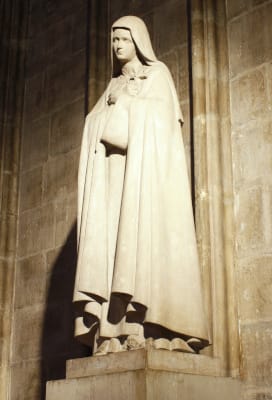
In 1934, Louis Castex created a life-size statue of Saint Thérèse of the Child Jesus, holding a cross and bouquets of roses close to her chest.
On display
In 1934, Louis Castex created a life-size statue of Saint Thérèse of the Child Jesus, holding a cross and bouquets of roses close to her chest.
On display
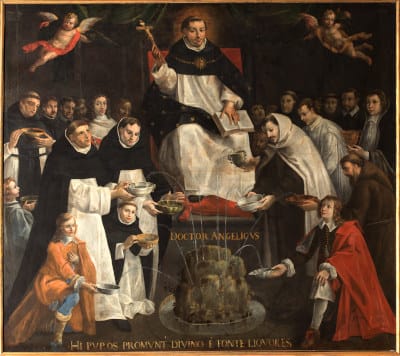
Painted by Antoine Nicolas in the 17th century, this painting was donated to the cathedral in 1950 by a Dominican convent in Paris for the 700th anniversary of Saint Thomas Aquinas’ death. It depicts an allegory of the saint’s spirituality as a fountain from which souls, thirsty for God, drink.
On display
Painted by Antoine Nicolas in the 17th century, this painting was donated to the cathedral in 1950 by a Dominican convent in Paris for the 700th anniversary of Saint Thomas Aquinas’ death. It depicts an allegory of the saint’s spirituality as a fountain from which souls, thirsty for God, drink.
On display
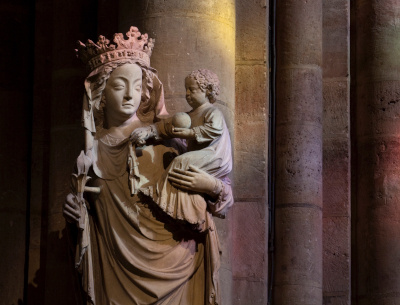
This statue of the Virgin dates from the 14th century. It comes from the Saint-Aignan chapel, which served the canons in the cloister of Notre-Dame. After the Revolution, it was installed in the trumeau of the Virgin’s portal. In 1855, Viollet-le-Duc decided to place it in front of the pillar at the entrance to the choir.
On display
This statue of the Virgin dates from the 14th century. It comes from the Saint-Aignan chapel, which served the canons in the cloister of Notre-Dame. After the Revolution, it was installed in the trumeau of the Virgin’s portal. In 1855, Viollet-le-Duc decided to place it in front of the pillar at the entrance to the choir.
On display
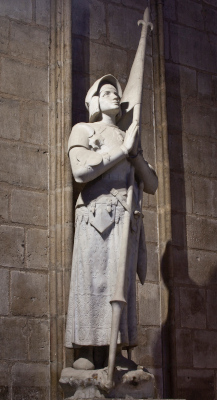
In the southwest corner, a marble statue of Saint Joan of Arc (1412-1431) is presented on a pedestal. The Maid was canonized in 1920, in the aftermath of World War I. Charles Jean Cléophas Desvergnes was tasked with executing a model of the saint for Notre-Dame de Paris. The work was inaugurated on May 7, 1921. Joan is shown in prayer, hands clasped, wearing a helmet, armor, and a fleur-de-lis skirt.
On display
In the southwest corner, a marble statue of Saint Joan of Arc (1412-1431) is presented on a pedestal. The Maid was canonized in 1920, in the aftermath of World War I. Charles Jean Cléophas Desvergnes was tasked with executing a model of the saint for Notre-Dame de Paris. The work was inaugurated on May 7, 1921. Joan is shown in prayer, hands clasped, wearing a helmet, armor, and a fleur-de-lis skirt.
On display
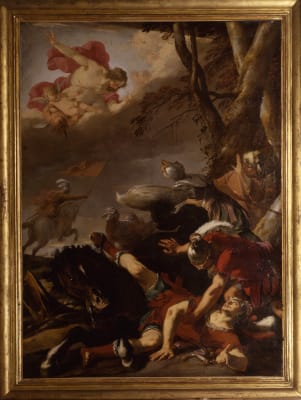
May painted in 1637 by Laurent de La Hyre, offered by the goldsmiths’ guild. It depicts the moment Saul, a persecutor of Christians, falls from his horse upon seeing the appearance of Christ, marking the beginning of his conversion.
On display
May painted in 1637 by Laurent de La Hyre, offered by the goldsmiths’ guild. It depicts the moment Saul, a persecutor of Christians, falls from his horse upon seeing the appearance of Christ, marking the beginning of his conversion.
On display
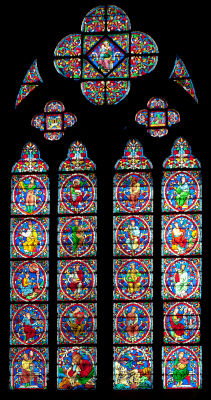
This stained glass window, signed by Didron in 1864, presents Jesse lying down, similar to a felled tree, his cheek resting on his right hand in a gesture of meditation, with his eyes closed, entirely absorbed in his inner vision. As seen in Chartres or the Sainte-Chapelle, David and Solomon settle in the branches, accompanied by other kings who are ancestors of Christ.
On display
This stained glass window, signed by Didron in 1864, presents Jesse lying down, similar to a felled tree, his cheek resting on his right hand in a gesture of meditation, with his eyes closed, entirely absorbed in his inner vision. As seen in Chartres or the Sainte-Chapelle, David and Solomon settle in the branches, accompanied by other kings who are ancestors of Christ.
On display
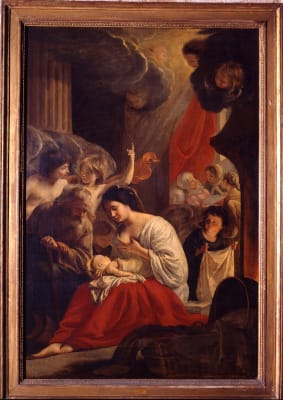
This painting, created for the altar of one of the cathedral’s chapels in the 17th century, presents a scene of nativity as it may have unfolded in that century. In the background, Anne, the Virgin Mary’s mother, is lying in bed. In the foreground, a nurse is breastfeeding the newborn child. The presence of two angels confirms the divine nature of the scene.
On display
This painting, created for the altar of one of the cathedral’s chapels in the 17th century, presents a scene of nativity as it may have unfolded in that century. In the background, Anne, the Virgin Mary’s mother, is lying in bed. In the foreground, a nurse is breastfeeding the newborn child. The presence of two angels confirms the divine nature of the scene.
On display