
- The “Mays” of Notre-Dame
- The Descent of the Holy Spirit
- Saint Peter Healing the Sick with His Shadow
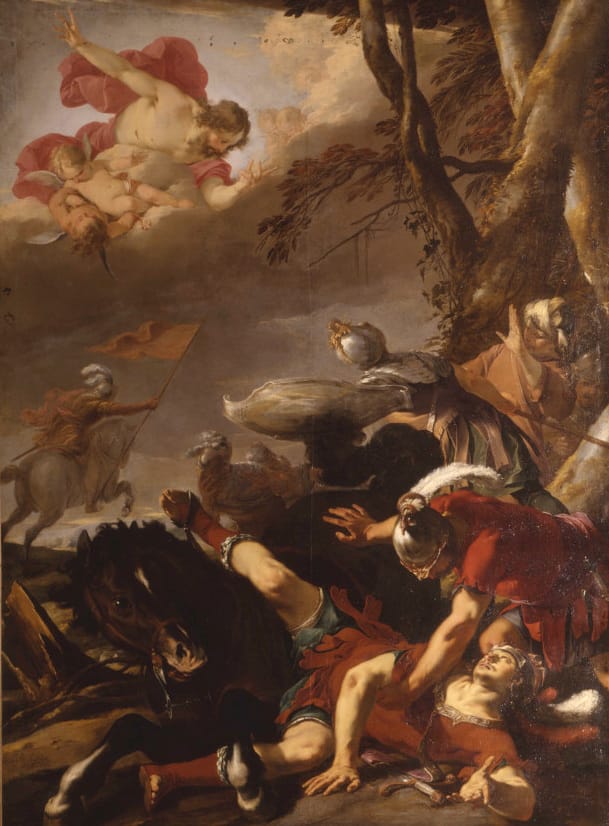
- The Conversion of saint Paul
- The Centurion Cornelius at the Feet of Saint Peter
- The Preaching of Saint Peter in Jerusalem
- The Crucifixion of Saint Peter
- The Crucifixion of Saint Andrew
- The Stoning of Saint Stephen
- The Predictions of the prophet Agabus to Saint Paul
- The Visitation
- Saint Thomas Aquinas, Fountain of Wisdom
Saint Paul
Saul was a Jew of the diaspora, a tentmaker from Tarsus in Cilicia (modern-day Turkey). He was part of the Jewish Pharisee movement and described himself as “overflowing with zeal for the traditions of his ancestors” (Galatians 1:14). A student of Gamaliel in Jerusalem, he approved of and witnessed the martyrdom of Stephen. As a Roman citizen, he stood at the crossroads of three cultures—of Jewish origin, he also spoke Greek, the common language of the Mediterranean world at the time. After his conversion, it is clear that he was destined to become the apostle to the Gentiles. He was martyred in Rome around the year 67.
In the Scriptures
“Saul, still breathing threats and murder against the disciples of the Lord, went to the high priest and asked him for letters to the synagogues in Damascus, so that if he found any followers of the Way, men or women, he might bring them bound to Jerusalem. As he journeyed, he was nearing Damascus when suddenly a light from heaven enveloped him in its brilliance. Falling to the ground, he heard a voice saying, ‘Saul, Saul, why do you persecute me?’ ‘Who are you, Lord?’ he asked. ‘I am Jesus, whom you are persecuting,’ the voice replied. ‘Now get up and enter the city, and you will be told what you must do.’ His traveling companions stood speechless, hearing the voice but seeing no one. Saul rose from the ground, but though his eyes were open, he could see nothing. So they led him by the hand into Damascus, where he remained blind for three days, without eating or drinking.” (Acts 9:1-9)
The Painting
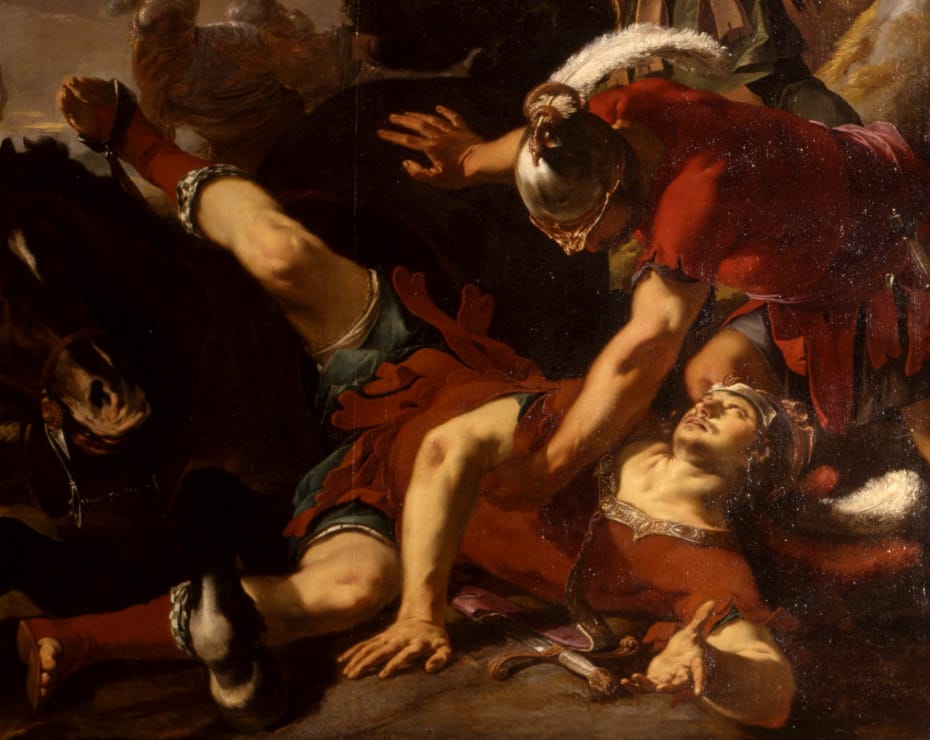
Paul’s radical conversion took place through his encounter with Christ on the road to Damascus. In an earlier sketch of the painting, the figure of Christ in the sky was absent. It was likely added at the request of the canons to make the scene more understandable. To emphasize the suddenness of the conversion, the artist depicts Saul’s fall as a fall from a horse—a mount associated with warriors and the powerful, symbolizing pride. Once on the ground, he is no longer Saul but becomes Paul, from the Latin paulus, meaning “small” or “weak.”
But why is he dressed as a Roman cavalryman? The key lies in Paul’s letter to the Ephesians, where he speaks of spiritual warfare:
“Stand firm then, with the belt of truth around your waist, with the breastplate of righteousness in place, with your feet fitted with the readiness to proclaim the gospel of peace. Take up the shield of faith, with which you can extinguish all the flaming arrows of the Evil One. Take the helmet of salvation and the sword of the Spirit, which is the word of God.” (Ephesians 6:14-17)
The agitated movements of the characters bring dynamic energy to the scene. The expressive faces embody the Baroque spirit, while the dazzling light against the stormy sky heightens the dramatic effect. By the 1640s, however, La Hyre would move away from Baroque lyricism toward a more classical style.
Laurent de La Hyre (1606-1656)
Laurent de La Hyre received his first commission for the Mays of Notre-Dame in 1635, painting Saint Peter Healing the Sick with His Shadow. Due to the success of this work, he was commissioned again to depict The Conversion of Saint Paul. His love for landscape painting is evident in the luminous sky. The painting is housed in the Chapel of Abraham at Notre-Dame.


